Posts

Showing posts with the label A Thing Of Beauty

A Thing Of Beauty (Summary & Critical Analysis)
Image
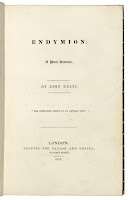
‘A Thing of Beauty’, - A Critical Analysis The excerpt, A Thing of Beauty by John Keats, taken from a larger poem, 'Endymion: A Poetic Romance,' is written in the Romantic style of writing. 'A Thing of Beauty' romanticizes beauty as something that has the ability to transform lives. Romanticizing is about investing objects with larger than life attributes, it is about extolling the virtues of an object - it could be any object, the poet's beloved, nature, beauty (in the case of this extract) -  anything that has impacted the mind of the poet. Often, the poet might be compelled to write about an actual incident, like for example, in the poem, 'Daffodils', Wordsworth describes how one incident left a lasting impression on his mind. The sight of Daffodils dancing in the wind becomes a memory to fall back on when the poet, feels low at heart. Some of the important aspects of the poem are listed below: 1.Genre/Style of Writing: A Thing of Beauty belongs to the Ro...
A Thing Of Beauty (Question & Answers)


A Thing Of Beauty (Poetic Devices)

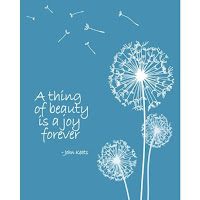
  Main Points The beautiful things of nature are a permanent source of joy and make our lives sweet. A thing of beauty is a joy forever. It does not pass into nothingness but its beauty keeps on increasing. It gives us sound sleep and good health. This world is full of frustration, disappointment, and a dearth of noble people. These make our life gloomy and sad. But things of beauty remove the pall and sadness from our spirits. Nature is a constant source of happiness for human beings. The beautiful things are – sheep, daffodils, clear streams, musk roses, and forest thickets. These things soothe and make us happy. Stories of heroes who have died in the war are also things of beauty and have a stimulating effect. The beauty of nature is like an immortal drink from heaven. POETIC DEVICES  Metaphor: bower quiet; sweet dreams; wreathing a flowery band; pall; the endless fountain of immortal drink  Alliteration: noble natures; cooling covert; band to bind  Imagery: flowe...

A Thing of Beauty (detailed analysis & explanation)

Image
A Thing of Beauty is a poem written by the famous romantic poet, John Keats. The poem tells about how nature and its wonder mesmerize us and take away all the sorrow that surrounds us from time to time. The following explanation might aid you in understanding this exceptional piece of work in poetry. Background Endymion is an epic poem in English. This poem by Keats is based on the Greek mythology of Endymion, the shepherd beloved by the moon goddess Selene. We see an elaboration of the original story and the moon Goddess Selene is named as “Cynthia”. The poem equates Endymion’s original romantic ardor with a more universal quest for a self-destroying transcendence in which he might achieve a blissful personal unity with all creation.  Endymios in Greek mythology is a story of a handsome youth who spent much of his life sleeping. There are different views related to Endymion. According to some tradition Endymion was the king of Elis. Several traditions say that he was offered by Ze...

A Thing Of Beauty (Intro & Theme)

Image
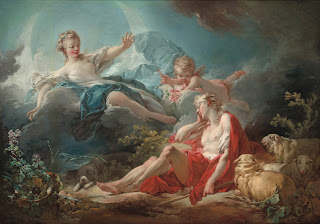
In Greek mythology – a vast component of Romantic-era education – the Aeolian shepherd Endymion, who resided in Olympia, attracted the attention of the Titan goddess Selene, of the moon. This youth makes a resolution to go after her and seek her. In this quest, he wanders through the forest and under the sea - So enamored was 'she' of the mortal that she asked Zeus to make him immortal so that he would never leave her as mortals did when they died. Zeus decides to grant her wish and puts him into an eternal sleep, which allows Selene to visit him every night. The subject of the story of Endymion has gone through a few variations over the years, but it was on this that John Keats based his 1818 poem, Endymion, which featured ‘A Thing of Beauty is a Joy Forever.' In the poem, the poet tells us that beautiful things bring immense pleasure and delight.  Furthermore, the poet explains that God's creations provide happiness as well as energy.  The things present all around pr...

A Thing Of Beauty

Image
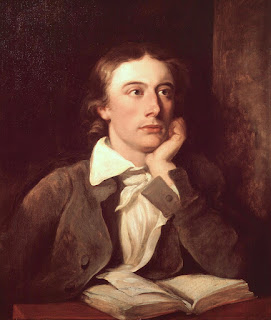
John Keats (31 October 1795 – 23 February 1821) was an English poet. He is often ranked as one of the five most important poets of the Romantic movement in English literature; the other four are William Wordsworth, Samuel Taylor Coleridge, Lord Byron, and Percy Bysshe Shelley. Though Keats was the youngest of these poets, he also died before the others: he suffered from tuberculosis and died in Rome at the age of 25. Keats was the son of an inn-keeper Thomas Keats, who died when Keats was nine years old, and Frances Keats; and his mother died of tuberculosis in 1810. The young Keats began studying to be a surgeon, though his interest in literature grew stronger than his interest in medicine. He became a friend and follower of the poet and editor James Henry Leigh Hunt and made his first attempts to write his own poetry. Keats's active writing life lasted only about six years, from the spring of 1814 through 1819. His short life meant that he wrote less than many other poets. His lo...