Posts
Should Wizard Hit Mommy? (Intro)
In the story, ‘Should Wizard hit mommy’, the writer, John Updike examines the issues of parenting and the flaws that inadvertently creep in. The adult tendency to quell the questioning mind of a child and also the intrusion of the beliefs held by adults to represent the only valid viewpoint, are areas that find mention in this simple yet powerful story. Jo, the four-year-old daughter of Jack, has been subjected to a bedtime story telling by her father ever since she was two years of age. As the story has a slight variation of a basic talk. It follows a simple unchanging plot in which the various characters all bear the name of Roger and the ending is predictable. Jack prides himself on what he thinks of as his ingenuity, and is especially proud his ability to enact the role of the old wizard, an integral part of each story, changing his voice so much better when Jo was smaller and would go to sleep sooner. He things of her two-year-old brother, Bobby, peacefully asleep and is almost pl...
Should Wizard Hit Mommy? (Themes)
Themes Storytelling and Control In “Should Wizard Hit Mommy?” the process of crafting a story is as important as the story itself. Indeed, Jack uses the Roger Skunk story to exercise control and decisiveness that he feels like he no longer possesses in his own life, and also to delay helping his pregnant wife, Clare, repaint the living room (and, in the process, delay confronting the fact that his family is about to get bigger). Far from merely a mechanism to get his daughter to sleep, the story becomes a way for Jack to re-contextualize his personal unhappiness, exercising total control over his simple narrative to compensate for a lack of control he feels in life. As a result, Jack is incredibly protective over his story and its hero, Roger Skunk, and views Jo’s attempts to change the structure of his story as more sinister attempts to control him as well. “Should Wizard Hit Mommy” was written in 1959 when John Updike was married to his first wife Mary Pennington. The couple lived in...
Should Wizard Hot Mommy? (Practice Questions)
Short questions What was the regular routine of Jack in the evening and for Saturdays? (p-49 , 1st para) Which animal did Jo suggest for the story that day? Why? (skunk, must have heard about skunks at nursery school) Do you think Jack and Jo could identify with Roger skunk as a victim of the hatred of other creatures (Jack brought the story to life when he narrated the tale remembering certain humiliations of his own childhood. The corners of Jo’s mouth drooped down and her lower lip bent forward. A tear flowed along the side of the nose. This shows that even Jo could identify with Roger skunk.) Which two opposite forces acted on Jack while he was telling Jo the story? (p-49 , last para) What was the cause of Roger Skunk’s sadness? (p-50 ,4th para, Mr Owl) Why did Roger Skunk go in search of the wizard? (SP) (-Everybody made fun of Roger Skunk because he gave out a bad smell.- he was upset about this-He met the old owl who advised him to go to the wizard, which would help him and give...
Should Wizard Hit Mommy? (Gist)

Gist of the Lesson The chapter captures a very sensitive reaction of a small girl to an important aspect of the story that her father narrates to her. The story reveals the worldview of a little child to a difficult moral question that shows her mental or psychological richness. Jo is a little girl of four years. She is engaged in a story session with her father. Jack, the father used to tell her a story every evening and especially for Saturday naps. Jo feels involved with the characters and the happenings. The story always had an animal with a problem. The old owl advises him to visit the wizard who would solve the problem. Skunk’s problem‐ he smelt bad, visited the wizard who changed it to the smell of roses. Skunk’s mother was unhappy with it and took him back to the wizard. She hit the wizard and asked him to restore the original smell. She wanted her son to keep his identity as a skunk and wanted his friends to accept him for himself. So the...
The Third Level (Summary)
x The story revolves around a 31-year-old man named Charley, who experienced something weird. One day after work, coming from the Subway, he reached the third level of the Grand Central station (which actually didn’t exist). He reminisces the entire experience with his psychiatrist friend Sam. Charley had reached somewhere in the eighteen-nineties, a time before the world saw two of its deadliest wars. As soon as he realized what time he is in, he immediately decided to buy two tickets to Galesburg, Illinois; one for himself and the other for his wife. Unfortunately, the currency used in that century was different. Thus, the next day he withdrew all his savings and got them converted even if it meant bearing losses. He went looking for the third level but failed to find it. It worried his wife and the psychiatrist Sam who told him that he is hallucinating in order to take refuge from reality and miseries of the modern world which is full of worry. Charley thus resorts to his stamp coll...
The Third Level (Intro & Theme)
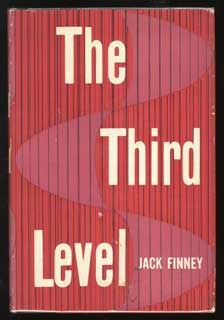
The Third Level by Jack Finney is about the harsh realities of war. War has irreversible consequences thus leaving people in a state of insecurity. It is also about modern-day problems and how the common man tends to escape reality by various means. The narrator interweaves fantasy with reality in the most futuristic projection of time travel. Charley, a young New York commuter loses his way. he finds himself in what he thinks is the third level of the Grand Central Station in New York. The Grand Central Station has subways on two levels from where the commuters take trains to different destinations. No third level was ever built. However, Charley believes in the existence of a third level, operating in a time frame of the 1890s. The period of the 1890s represents a peaceful life not possible in the present era. From this level, Charley wants to travel to Galesburg, Illinois, with his wife Louisa. For him, it is a part of reality while his psychiatrist friend calls it a "waking-d...
The Third Level

Jack Finney specialized in thrillers and works of science fiction. Two of his novels, The Body Snatchers and Good Neighbor Sam became the basis of popular films, but it was Time and Again (1970) that won him a devoted following. The novel, about an advertising artist who travels back to the New York of the 1880s, quickly became a cult favorite, beloved especially by New Yorkers for its rich, painstakingly researched descriptions of life in the city more than a century ago. Mr. Finney, whose original name was Walter Braden Finney, was born in Milwaukee and attended Knox College in Galesburg, Illinois. After moving to New York and working in the advertising industry, he began writing stories for popular magazines like Collier's, The Saturday Evening Post, and McCall's. His first novel, Five Against the House (1954), told the story of five college students who plot to rob a casino in Reno. A year later he published The Body Snatchers (later reissued as Invasion of the Body Snatche...
The Enemy (Themes)

THEMES Racism as a By-Product of Nationalism All of the Japanese characters exhibit a profoundly antagonistic attitude toward white people. The only explanation for this deep-seated hatred of whites and feeling of superiority toward them is offered through the experiences of Sadao in America. Yet, every one of his recollections proves to reference people who were kind, merciful or showing compassion toward him. If experience is the driving mechanism behind such comprehensive hatred and dismissal of millions of people simply due to the color of their skin, then Sadao’s racism can only be termed irrational. In this way, that racism is inextricably linked to the negative influence of nationalism. Since Sadao’s experiences do not align with his bias, it can only be explained as a condition engendered by a steady diet of nationalist propaganda. Duty vs. Self-Interest This theme is explored through two different men representing two distinct expressions of self-interest. Sadao knows it is hi...
The Enemy (Summary & Key-Points)

Life during the second world war in Japan. Dr. Sadao Hoki and his wife Hana spot a dark shape in the surf that turns out to be a white man; a severely wounded soldier. At first, they agree to turn the man over to authorities as a prisoner of war. This makes only perfect sense considering not just the ramifications of treating his wounds, but that the doctor and his wife are both virulently racist nationalists who consider the Japanese to be superior to the white race anywhere in the world. They had met in America before the war and they only proposed because his father consented to his choice of a pureblood. Changing their minds in the face of the massive trauma exhibited by the man, the two agree to take him back to their home and treat his injuries as an act of humanitarian compassion consistent with their belief in the superiority of the Japanese people. They must inform their servants of this decision, of course. The servants are every bit as racially prejudiced and biased as their...
The Enemy (Character, Settings & Background)
Characters Dr. Sadao Hoki – A Japanese doctor. He studied medicine in America and later returned to Japan. Hana – His wife, Japanese. The two met in America, became friends, and married there legally. It is unlikely that Hana was a medical student. Sadao’s father – A true, die-hard Japanese, blindly patriotic. He did not allow any foreign articles at home. The old General – Japan’s army General; Sadao’s patient. He was a cruel man in his prime years. Tom – An American soldier who got ashore near Sadao’s house following a serious injury. Tom was treated by Sadao. Yumi – Sadao’s maid, in charge of the babies. She was attached to the babies. Gardener – Sadao’s gardener, an old man, in service since Sadao’s father’s time. The cook – Sadao’s cook, an old man, in service since Sadao’s father’s time. An officer – A messenger of the General. Settings & Background The story happens in a coastal town of Japan. Most probably in the year 1941 following Japan attacking Pearl Harbor where ...
The Enemy (Intro)

Would YOU risk your reputation, your safety, and your family’s well-being to help a wounded enemy? It is wartime and a doctor needs to make a life or death decision. In “The Enemy,” a story set in Japan during World War II, an American-trained Japanese surgeon pulls a wounded American sailor, presumably an escaped POW, from the surf behind his home. At first, he and his wife cannot decide what they should do with him. They are unable to put the man back into the sea although they realize he is an enemy and that for fear of the authorities they should do just that. Against the advice of his wife, and at great risk to his honor, career, position and life, Dr. Hoki hides the wounded American, operates on him, and saves his life. The surgery is successful, and the couple settle into a period of hope ...