Posts
Should Wizard Hit Mommy? (Intro)
In the story, ‘Should Wizard hit mommy’, the writer, John Updike examines the issues of parenting and the flaws that inadvertently creep in. The adult tendency to quell the questioning mind of a child and also the intrusion of the beliefs held by adults to represent the only valid viewpoint, are areas that find mention in this simple yet powerful story. Jo, the four-year-old daughter of Jack, has been subjected to a bedtime story telling by her father ever since she was two years of age. As the story has a slight variation of a basic talk. It follows a simple unchanging plot in which the various characters all bear the name of Roger and the ending is predictable. Jack prides himself on what he thinks of as his ingenuity, and is especially proud his ability to enact the role of the old wizard, an integral part of each story, changing his voice so much better when Jo was smaller and would go to sleep sooner. He things of her two-year-old brother, Bobby, peacefully asleep and is almost pl...
Should Wizard Hit Mommy? (Themes)
Themes Storytelling and Control In “Should Wizard Hit Mommy?” the process of crafting a story is as important as the story itself. Indeed, Jack uses the Roger Skunk story to exercise control and decisiveness that he feels like he no longer possesses in his own life, and also to delay helping his pregnant wife, Clare, repaint the living room (and, in the process, delay confronting the fact that his family is about to get bigger). Far from merely a mechanism to get his daughter to sleep, the story becomes a way for Jack to re-contextualize his personal unhappiness, exercising total control over his simple narrative to compensate for a lack of control he feels in life. As a result, Jack is incredibly protective over his story and its hero, Roger Skunk, and views Jo’s attempts to change the structure of his story as more sinister attempts to control him as well. “Should Wizard Hit Mommy” was written in 1959 when John Updike was married to his first wife Mary Pennington. The couple lived in...
Should Wizard Hot Mommy? (Practice Questions)
Short questions What was the regular routine of Jack in the evening and for Saturdays? (p-49 , 1st para) Which animal did Jo suggest for the story that day? Why? (skunk, must have heard about skunks at nursery school) Do you think Jack and Jo could identify with Roger skunk as a victim of the hatred of other creatures (Jack brought the story to life when he narrated the tale remembering certain humiliations of his own childhood. The corners of Jo’s mouth drooped down and her lower lip bent forward. A tear flowed along the side of the nose. This shows that even Jo could identify with Roger skunk.) Which two opposite forces acted on Jack while he was telling Jo the story? (p-49 , last para) What was the cause of Roger Skunk’s sadness? (p-50 ,4th para, Mr Owl) Why did Roger Skunk go in search of the wizard? (SP) (-Everybody made fun of Roger Skunk because he gave out a bad smell.- he was upset about this-He met the old owl who advised him to go to the wizard, which would help him and give...
Should Wizard Hit Mommy? (Gist)

Gist of the Lesson The chapter captures a very sensitive reaction of a small girl to an important aspect of the story that her father narrates to her. The story reveals the worldview of a little child to a difficult moral question that shows her mental or psychological richness. Jo is a little girl of four years. She is engaged in a story session with her father. Jack, the father used to tell her a story every evening and especially for Saturday naps. Jo feels involved with the characters and the happenings. The story always had an animal with a problem. The old owl advises him to visit the wizard who would solve the problem. Skunk’s problem‐ he smelt bad, visited the wizard who changed it to the smell of roses. Skunk’s mother was unhappy with it and took him back to the wizard. She hit the wizard and asked him to restore the original smell. She wanted her son to keep his identity as a skunk and wanted his friends to accept him for himself. So the...
A Roadside Stand (critical analysis)
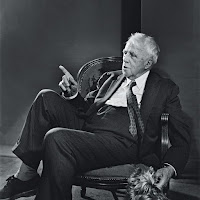
“A Roadside Stand” was first published in the June 1936 issue of the Atlantic Monthly before being collected in A Further Range with the subtitle “On Being Put out of Our Misery.” Frost at one time considered the title “Euthanasia” for the poem (Thompson, 439). “A Roadside Stand” is another quarrel over modernization. Frost resists contemporary encroachment here as he does in other poems, such as “Lines Written in Dejection on the Eve of Great Success” (1962) about the United States space program or “The Line-Gang” about the telephone. The roadside stand is a sad symbol of a past that is fading rapidly. As it is depicted, it is also evidence of a decline in agricultural prosperity. The roadside farm stand is characterized as a person selling berries, almost pleading with the people who drive by to make a purchase. The poem begins with the “little new shed” and traffic speeding by. The folks at the stand are hopeful that some “of the cash, whose flow supports / The flower of cities from...
A Roadside Stand

Robert Lee Frost (March 26, 1874 – January 29, 1963) was an American poet. His work was initially published in England before it was published in the United States. Known for his realistic depictions of rural life and his command of American colloquial speech, Frost frequently wrote about settings from rural life in New England in the early 20th century, using them to examine complex social and philosophical themes. Frost was honored frequently during his lifetime and is the only poet to receive four Pulitzer Prizes for Poetry. He became one of America's rare "public literary figures, almost an artistic institution." He was awarded the Congressional Gold Medal in 1960 for his poetic works. On July 22, 1961, Frost was named poet laureate of Vermont. Summary: The little old house was out with a little new shed In front at the edge of the road where the traffic sped, A roadside stand that too pathetically pled, It would not be fair to say for a dole of bread, But for some of...
The Rattrap (Critical Analysis)

The Rattrap is a beautiful story that deals with the themes of love, compassion, the importance of human dignity , and the transformative power of love . Make sure you’ve read the summary of the story before you read this analysis. With its compassionate approach toward the characters, the story acknowledges that one’s actions result from one’s belief system and one’s belief system is largely determined by one’s material condition . This empathic approach is seen at the beginning of the story where we are introduced to the peddler. The inclusion of the peddler’s philosophical thoughts about the rattrap at the beginning of the story is important as it helps us understand his behavior at various points in the story. The narrator is quick to point out that the peddler’s pessimistic view about the world as a rattrap arose from the fact that the “world had never been kind to him” and it gave him some pleasure to think of it in this way. Perhaps this is the reason why he steals the old man...
The Rattrap
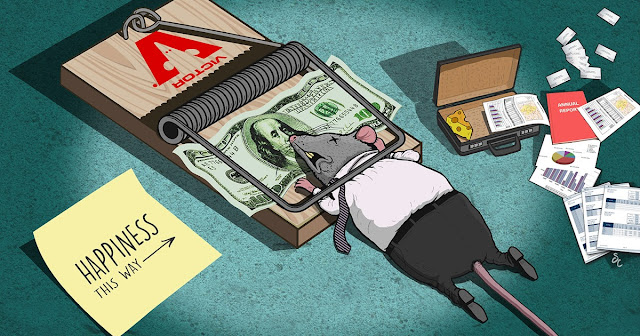
The Rattrap - Selma Lagerlof Characters A tramp with rattraps. A crofter Master Smith in the Ramsjo Iron Mill in Sweden Helpers in the Mill – blacksmiths Iron mill owner Edla Willmansson – daughter of the Iron Mill owner. Justification of Title “The Rattrap” is an appropriate title as it is the story of a rattrap peddler. The author has used the metaphor of a Rattrap to highlight the human predicament. Just as a rat is fooled by the bait and gets trapped, most human beings also fall into the trap of material benefits. The story revolves around the incident of a man getting trapped due to his greed. Hence, the title is an apt one. THEME Human beings are prone to fall into the trap of material benefits. It is the human tendency to redeem oneself from dishonest ways. Hence, the whole world is called a big rattrap which tempts the people towards its materialistic benefits and brings about their doom and never-ending predicament. It also highlights the themes like human loneliness, st...
A Thing Of Beauty (Summary & Critical Analysis)
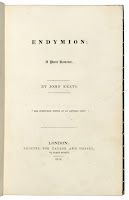
‘A Thing of Beauty’, - A Critical Analysis The excerpt, A Thing of Beauty by John Keats, taken from a larger poem, 'Endymion: A Poetic Romance,' is written in the Romantic style of writing. 'A Thing of Beauty' romanticizes beauty as something that has the ability to transform lives. Romanticizing is about investing objects with larger than life attributes, it is about extolling the virtues of an object - it could be any object, the poet's beloved, nature, beauty (in the case of this extract) - anything that has impacted the mind of the poet. Often, the poet might be compelled to write about an actual incident, like for example, in the poem, 'Daffodils', Wordsworth describes how one incident left a lasting impression on his mind. The sight of Daffodils dancing in the wind becomes a memory to fall back on when the poet, feels low at heart. Some of the important aspects of the poem are listed below: 1.Genre/Style of Writing: A Thing of Beauty belongs to the Ro...
Indigo
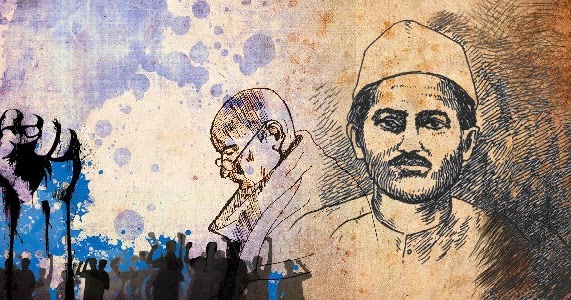
This chapter belongs to Mahatma Gandhi, a prominent political leader of India known as ‘Bapu’(The Father of The Nation). His role in the freedom movement of India is unforgettable. About The Author Louis Fischer was born on 29 February 1896 in Philadelphia, Pennsylvania, USA. First, he worked as a school teacher. Then he served as a volunteer in the British Army during the First World War and then he made a career as a journalist and wrote for ‘The New York Times’, ‘The Saturday Review’ and for ‘European and Asian Publications’. As a journalist, he lived through and reported the Second World War. He was a Jewish‐American who was greatly influenced by Gandhiji’s use of non‐violence and spiritualism as political tools. He wrote highly acclaimed books on Gandhi and Lenin. He died at the age of 73 on 15 January 1970 in Princeton, New Jersey, USA. About The Chapter This chapter is an excerpt from Louis Fischer’s famous book ‘The Life of Mahatma Gandhi’. The writ...