Posts

Showing posts with the label Summary

A Photograph (intro)

Image
The title of the poem is much appropriate as it reminds the poet of her mother. A photograph is something that captures a certain moment of someone’s life. The person might change in course of time but the memories attached with the photograph are eternal. In this poem, the poet’s mother is no more but the photograph makes her memories come alive. The mother’s sweet face and her cousins have changed with time but the moment captured in the photograph still gives happiness to the poet’s mother when she views it thirty to forty years later. The poet reminisces that the sea holiday was the past of her mother and for her the laughter of her mother is past now. Both the moments of life have been permanently etched in the poet’s mind with the feeling of eternal loss. Death now has overpowered the innocence of these moments and the pleasure they treasured. The poet concludes the poem on a melancholy note with the comment that there is nothing to say or comment upon this sad event. The silence...

A Roadside Stand

Image
Robert Lee Frost (March 26, 1874 – January 29, 1963) was an American poet. His work was initially published in England before it was published in the United States. Known for his realistic depictions of rural life and his command of American colloquial speech, Frost frequently wrote about settings from rural life in New England in the early 20th century, using them to examine complex social and philosophical themes. Frost was honored frequently during his lifetime and is the only poet to receive four Pulitzer Prizes for Poetry. He became one of America's rare "public literary figures, almost an artistic institution." He was awarded the Congressional Gold Medal in 1960 for his poetic works. On July 22, 1961, Frost was named poet laureate of Vermont. Summary: The little old house was out with a little new shed In front at the edge of the road where the traffic sped, A roadside stand that too pathetically pled, It would not be fair to say for a dole of bread, But for some of...

A Thing Of Beauty (Summary & Critical Analysis)

Image
‘A Thing of Beauty’, - A Critical Analysis The excerpt, A Thing of Beauty by John Keats, taken from a larger poem, 'Endymion: A Poetic Romance,' is written in the Romantic style of writing. 'A Thing of Beauty' romanticizes beauty as something that has the ability to transform lives. Romanticizing is about investing objects with larger than life attributes, it is about extolling the virtues of an object - it could be any object, the poet's beloved, nature, beauty (in the case of this extract) -  anything that has impacted the mind of the poet. Often, the poet might be compelled to write about an actual incident, like for example, in the poem, 'Daffodils', Wordsworth describes how one incident left a lasting impression on his mind. The sight of Daffodils dancing in the wind becomes a memory to fall back on when the poet, feels low at heart. Some of the important aspects of the poem are listed below: 1.Genre/Style of Writing: A Thing of Beauty belongs to the Ro...

Indigo

Image
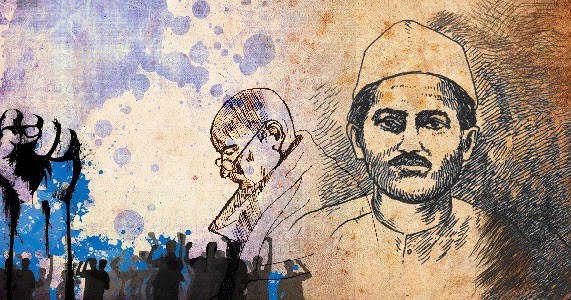
This chapter belongs to Mahatma Gandhi, a prominent political leader of India known as ‘Bapu’(The Father of The Nation). His role in the freedom movement of India is unforgettable.  About The Author  Louis Fischer was born on 29 February 1896 in Philadelphia, Pennsylvania, USA. First, he worked as a school teacher. Then he served as a volunteer in the British Army during the First World War and then he made a career as a journalist and wrote for ‘The New York Times’, ‘The Saturday Review’ and for  ‘European and Asian Publications’. As a journalist, he lived through and reported the Second World War. He was a Jewish‐American who was greatly influenced by Gandhiji’s use of non‐violence and spiritualism as political tools. He wrote highly acclaimed books on Gandhi and Lenin. He died at the age of 73 on 15 January 1970 in Princeton, New Jersey, USA.  About The Chapter  This chapter is an excerpt from Louis Fischer’s famous book ‘The Life of Mahatma Gandhi’. The writ...

The Third Level (Summary)

Image
x The story revolves around a 31-year-old man named Charley, who experienced something weird. One day after work, coming from the Subway, he reached the third level of the Grand Central station (which actually didn’t exist). He reminisces the entire experience with his psychiatrist friend Sam. Charley had reached somewhere in the eighteen-nineties, a time before the world saw two of its deadliest wars. As soon as he realized what time he is in, he immediately decided to buy two tickets to Galesburg, Illinois; one for himself and the other for his wife. Unfortunately, the currency used in that century was different. Thus, the next day he withdrew all his savings and got them converted even if it meant bearing losses. He went looking for the third level but failed to find it. It worried his wife and the psychiatrist Sam who told him that he is hallucinating in order to take refuge from reality and miseries of the modern world which is full of worry. Charley thus resorts to his stamp coll...

An Elementary School Classroom in a Slum (Theme & Analysis)

Image
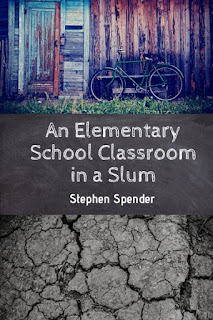
THEME : Social injustice and class inequalitie s  Main Points  Stanza-1  The poem portrays a picture of an elementary school in a slum area. Deprived of basic facilities such as-nutritional food, balanced diet, air, sunshine and potable water, children are least interested in studies The tall girl and paper seeming boy-all are victims of malnutrition; they are suffering from various diseases A boy sitting at the back is dreaming of squirrel's game. He has no interest in class-room activity. Stanza-2  The class-room wall contains pictures and paintings - like Shakespeare's head developed cities with skyscrapers Tyrolese valley aesthetically beautiful, problem free world(cloudless at dawn)-they came by donations. These pictures belong to the world of the rich and prosperous. The world of these poor and deprived children contrasts with the world depicted on classroom walls. The rich have drawn an open handed map which is of no use to them as their world is limited to th...

Lost Spring: Stories of a Stolen Childhood (Gist)

Image
Gist of the lesson:  Sometimes I find a rupee in the garbage  The author examines and analyses the impoverished conditions and traditions that condemn children to a life of exploitation these children are denied education and are forced into hardships early in their lives. The writer encounters Saheb – a rag picker whose parents have left behind the life of poverty in Dhaka to earn a living in Delhi. His family like many other families of rag pickers lives in Seemapuri. They do not have any identification other than a ration card. The children do not go to school and they are excited at the prospect of finding a coin or even a ten-rupee note for rummaging in the garbage. It is the only way of earning -lives in impoverished conditions - resigned to their fate. The writer is pained to see Saheb, a rag picker whose name means the “lord of the universe”, lose the spark of childhood and roam barefoot with his friends. From morning to noon the author encounters him in a tea stall - ...

Lost Spring: Stories of a Stolen Childhood (intro & Summary)

Image
Introduction  The story, “Lost Spring” describes the pitiable condition of poor children who have been forced to miss the joy of childhood due to the socio-economic condition that prevails in this man-made world. These children are denied the opportunity of schooling and forced into labor early in life. Anees Jung gives voice to eliminate child labor by educating the children and to enforce the laws against child labor by the government strictly. The call is to end child exploitation and let the children enjoy the days of the spring that bring joy under their feet.  Summary   I – Sometimes I find a rupee in the garbage.   The first part tells the writer’s impressions about the life of the poor rag pickers. The rag pickers have migrated from Dhaka and found a settlement in Seemapuri. Their fields and homes had been swept away by storms. They had come to the big city to find a living. They are poor. The writer watches Saheb every morning scrounging for “gold” in her ne...

The Enemy (Summary & Key-Points)

Image
Life during the second world war in Japan. Dr. Sadao Hoki and his wife Hana spot a dark shape in the surf that turns out to be a white man; a severely wounded soldier. At first, they agree to turn the man over to authorities as a prisoner of war. This makes only perfect sense considering not just the ramifications of treating his wounds, but that the doctor and his wife are both virulently racist nationalists who consider the Japanese to be superior to the white race anywhere in the world. They had met in America before the war and they only proposed because his father consented to his choice of a pureblood. Changing their minds in the face of the massive trauma exhibited by the man, the two agree to take him back to their home and treat his injuries as an act of humanitarian compassion consistent with their belief in the superiority of the Japanese people. They must inform their servants of this decision, of course. The servants are every bit as racially prejudiced and biased as their...