Posts
A Roadside Stand (critical analysis)
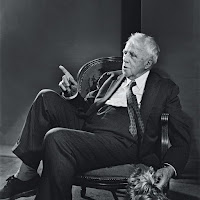
“A Roadside Stand” was first published in the June 1936 issue of the Atlantic Monthly before being collected in A Further Range with the subtitle “On Being Put out of Our Misery.” Frost at one time considered the title “Euthanasia” for the poem (Thompson, 439). “A Roadside Stand” is another quarrel over modernization. Frost resists contemporary encroachment here as he does in other poems, such as “Lines Written in Dejection on the Eve of Great Success” (1962) about the United States space program or “The Line-Gang” about the telephone. The roadside stand is a sad symbol of a past that is fading rapidly. As it is depicted, it is also evidence of a decline in agricultural prosperity. The roadside farm stand is characterized as a person selling berries, almost pleading with the people who drive by to make a purchase. The poem begins with the “little new shed” and traffic speeding by. The folks at the stand are hopeful that some “of the cash, whose flow supports / The flower of cities from...
A Roadside Stand

Robert Lee Frost (March 26, 1874 – January 29, 1963) was an American poet. His work was initially published in England before it was published in the United States. Known for his realistic depictions of rural life and his command of American colloquial speech, Frost frequently wrote about settings from rural life in New England in the early 20th century, using them to examine complex social and philosophical themes. Frost was honored frequently during his lifetime and is the only poet to receive four Pulitzer Prizes for Poetry. He became one of America's rare "public literary figures, almost an artistic institution." He was awarded the Congressional Gold Medal in 1960 for his poetic works. On July 22, 1961, Frost was named poet laureate of Vermont. Summary: The little old house was out with a little new shed In front at the edge of the road where the traffic sped, A roadside stand that too pathetically pled, It would not be fair to say for a dole of bread, But for some of...
The Rattrap (Critical Analysis)

The Rattrap is a beautiful story that deals with the themes of love, compassion, the importance of human dignity , and the transformative power of love . Make sure you’ve read the summary of the story before you read this analysis. With its compassionate approach toward the characters, the story acknowledges that one’s actions result from one’s belief system and one’s belief system is largely determined by one’s material condition . This empathic approach is seen at the beginning of the story where we are introduced to the peddler. The inclusion of the peddler’s philosophical thoughts about the rattrap at the beginning of the story is important as it helps us understand his behavior at various points in the story. The narrator is quick to point out that the peddler’s pessimistic view about the world as a rattrap arose from the fact that the “world had never been kind to him” and it gave him some pleasure to think of it in this way. Perhaps this is the reason why he steals the old man...
The Rattrap
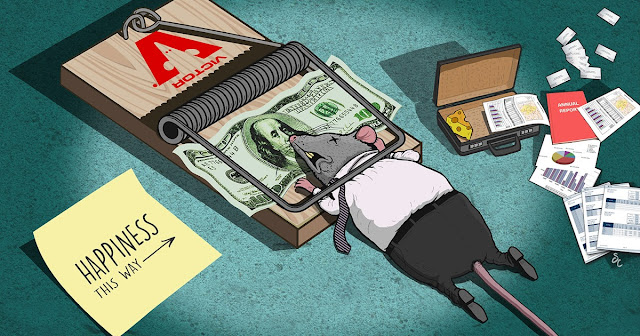
The Rattrap - Selma Lagerlof Characters A tramp with rattraps. A crofter Master Smith in the Ramsjo Iron Mill in Sweden Helpers in the Mill – blacksmiths Iron mill owner Edla Willmansson – daughter of the Iron Mill owner. Justification of Title “The Rattrap” is an appropriate title as it is the story of a rattrap peddler. The author has used the metaphor of a Rattrap to highlight the human predicament. Just as a rat is fooled by the bait and gets trapped, most human beings also fall into the trap of material benefits. The story revolves around the incident of a man getting trapped due to his greed. Hence, the title is an apt one. THEME Human beings are prone to fall into the trap of material benefits. It is the human tendency to redeem oneself from dishonest ways. Hence, the whole world is called a big rattrap which tempts the people towards its materialistic benefits and brings about their doom and never-ending predicament. It also highlights the themes like human loneliness, st...
A Thing Of Beauty (Summary & Critical Analysis)
‘A Thing of Beauty’, - A Critical Analysis The excerpt, A Thing of Beauty by John Keats, taken from a larger poem, 'Endymion: A Poetic Romance,' is written in the Romantic style of writing. 'A Thing of Beauty' romanticizes beauty as something that has the ability to transform lives. Romanticizing is about investing objects with larger than life attributes, it is about extolling the virtues of an object - it could be any object, the poet's beloved, nature, beauty (in the case of this extract) - anything that has impacted the mind of the poet. Often, the poet might be compelled to write about an actual incident, like for example, in the poem, 'Daffodils', Wordsworth describes how one incident left a lasting impression on his mind. The sight of Daffodils dancing in the wind becomes a memory to fall back on when the poet, feels low at heart. Some of the important aspects of the poem are listed below: 1.Genre/Style of Writing: A Thing of Beauty belongs to the Ro...
Indigo

This chapter belongs to Mahatma Gandhi, a prominent political leader of India known as ‘Bapu’(The Father of The Nation). His role in the freedom movement of India is unforgettable. About The Author Louis Fischer was born on 29 February 1896 in Philadelphia, Pennsylvania, USA. First, he worked as a school teacher. Then he served as a volunteer in the British Army during the First World War and then he made a career as a journalist and wrote for ‘The New York Times’, ‘The Saturday Review’ and for ‘European and Asian Publications’. As a journalist, he lived through and reported the Second World War. He was a Jewish‐American who was greatly influenced by Gandhiji’s use of non‐violence and spiritualism as political tools. He wrote highly acclaimed books on Gandhi and Lenin. He died at the age of 73 on 15 January 1970 in Princeton, New Jersey, USA. About The Chapter This chapter is an excerpt from Louis Fischer’s famous book ‘The Life of Mahatma Gandhi’. The writ...
A Thing Of Beauty (Poetic Devices)
Main Points The beautiful things of nature are a permanent source of joy and make our lives sweet. A thing of beauty is a joy forever. It does not pass into nothingness but its beauty keeps on increasing. It gives us sound sleep and good health. This world is full of frustration, disappointment, and a dearth of noble people. These make our life gloomy and sad. But things of beauty remove the pall and sadness from our spirits. Nature is a constant source of happiness for human beings. The beautiful things are – sheep, daffodils, clear streams, musk roses, and forest thickets. These things soothe and make us happy. Stories of heroes who have died in the war are also things of beauty and have a stimulating effect. The beauty of nature is like an immortal drink from heaven. POETIC DEVICES Metaphor: bower quiet; sweet dreams; wreathing a flowery band; pall; the endless fountain of immortal drink Alliteration: noble natures; cooling covert; band to bind Imagery: flowe...
A Thing of Beauty (detailed analysis & explanation)
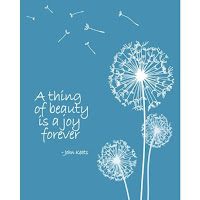
A Thing of Beauty is a poem written by the famous romantic poet, John Keats. The poem tells about how nature and its wonder mesmerize us and take away all the sorrow that surrounds us from time to time. The following explanation might aid you in understanding this exceptional piece of work in poetry. Background Endymion is an epic poem in English. This poem by Keats is based on the Greek mythology of Endymion, the shepherd beloved by the moon goddess Selene. We see an elaboration of the original story and the moon Goddess Selene is named as “Cynthia”. The poem equates Endymion’s original romantic ardor with a more universal quest for a self-destroying transcendence in which he might achieve a blissful personal unity with all creation. Endymios in Greek mythology is a story of a handsome youth who spent much of his life sleeping. There are different views related to Endymion. According to some tradition Endymion was the king of Elis. Several traditions say that he was offered by Ze...
A Thing Of Beauty (Intro & Theme)
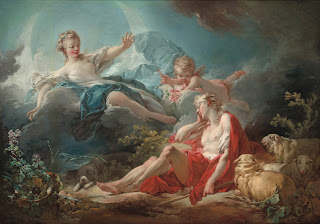
In Greek mythology – a vast component of Romantic-era education – the Aeolian shepherd Endymion, who resided in Olympia, attracted the attention of the Titan goddess Selene, of the moon. This youth makes a resolution to go after her and seek her. In this quest, he wanders through the forest and under the sea - So enamored was 'she' of the mortal that she asked Zeus to make him immortal so that he would never leave her as mortals did when they died. Zeus decides to grant her wish and puts him into an eternal sleep, which allows Selene to visit him every night. The subject of the story of Endymion has gone through a few variations over the years, but it was on this that John Keats based his 1818 poem, Endymion, which featured ‘A Thing of Beauty is a Joy Forever.' In the poem, the poet tells us that beautiful things bring immense pleasure and delight. Furthermore, the poet explains that God's creations provide happiness as well as energy. The things present all around pr...
A Thing Of Beauty
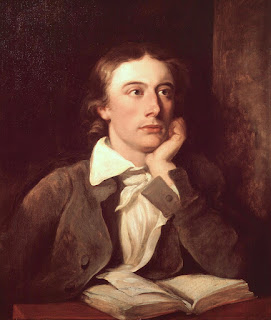
John Keats (31 October 1795 – 23 February 1821) was an English poet. He is often ranked as one of the five most important poets of the Romantic movement in English literature; the other four are William Wordsworth, Samuel Taylor Coleridge, Lord Byron, and Percy Bysshe Shelley. Though Keats was the youngest of these poets, he also died before the others: he suffered from tuberculosis and died in Rome at the age of 25. Keats was the son of an inn-keeper Thomas Keats, who died when Keats was nine years old, and Frances Keats; and his mother died of tuberculosis in 1810. The young Keats began studying to be a surgeon, though his interest in literature grew stronger than his interest in medicine. He became a friend and follower of the poet and editor James Henry Leigh Hunt and made his first attempts to write his own poetry. Keats's active writing life lasted only about six years, from the spring of 1814 through 1819. His short life meant that he wrote less than many other poets. His lo...
An Elementary School Classroom in a Slum (Theme & Analysis)
THEME : Social injustice and class inequalitie s Main Points Stanza-1 The poem portrays a picture of an elementary school in a slum area. Deprived of basic facilities such as-nutritional food, balanced diet, air, sunshine and potable water, children are least interested in studies The tall girl and paper seeming boy-all are victims of malnutrition; they are suffering from various diseases A boy sitting at the back is dreaming of squirrel's game. He has no interest in class-room activity. Stanza-2 The class-room wall contains pictures and paintings - like Shakespeare's head developed cities with skyscrapers Tyrolese valley aesthetically beautiful, problem free world(cloudless at dawn)-they came by donations. These pictures belong to the world of the rich and prosperous. The world of these poor and deprived children contrasts with the world depicted on classroom walls. The rich have drawn an open handed map which is of no use to them as their world is limited to th...